
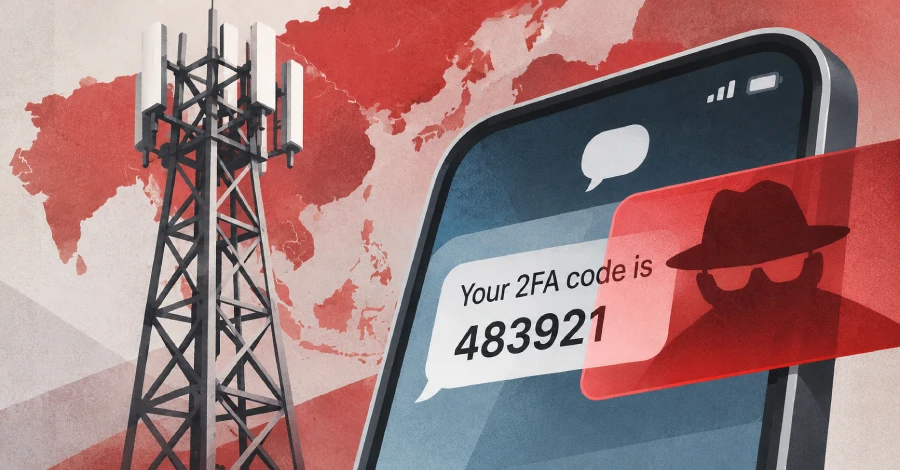
Enea, a Stockholm telecom and security software company, published research on November 11 describing a spying group it has named SilentAir. According to the report, SilentAir did not attack from the outside: it controlled equipment inside mobile operators in at least six Asian countries and used it to send attack messages into the shared network that carriers use to exchange signalling traffic for roaming, calls and texts (the IPX). From there it targeted people in a dozen more countries and territories, with Taiwan the primary target. Enea says it assesses with high confidence that SilentAir is a state-level actor and with low confidence that its activity lines up with China-nexus operations. The company’s basis for the China link, as described by The Hacker News, is that SilentAir avoided Chinese networks and subscribers and worked to a UTC+8 working day, starting at 9 a.m., nearly stopping on weekends and slowing around Chinese holidays.
The main technique was a location trick. SilentAir sent the target’s home network an SS7 UpdateLocation message, or its Diameter equivalent, claiming the hacked equipment was now serving that person’s phone. If the home network accepted it, the target’s calls and texts were diverted to the attackers. Enea says that for some targets it saw two-factor authentication codes arriving right after the diversion took effect, which suggests an attempt to break into other accounts registered to those people. Enea’s report does not show the same for voice calls, and it does not say whether any account was taken over. Interception made up 18.3% of the SilentAir attacks Enea observed, against 2.07% for a typical surveillance company in its earlier research. Some targets were political and government VIPs in their own countries.
SilentAir also sent silent SMS messages on a very large scale, mainly to subscribers in Taiwan. These are texts a phone does not display. Enea says one main use appears to have been testing whether a diversion had worked; the purpose of the large night-time batches to Taiwan is not confirmed, and the messages carried spam-like promotional text that Enea believes was a disguise.
Enea calls a link to Liminal Panda, a group behind earlier telecom intrusions, possible but unconfirmed. According to The Hacker News, the behavior also partly matches a Linux kernel trojan called SCTPE, which Singapore’s IMDA describes as SIGweaver in an advisory (we could not read the PDF), but Enea says SilentAir answered messages the known SCTPE program cannot answer. Enea says the group has been disrupted for now but could return, and The Hacker News reports the company has told the operators where it found SilentAir sources. Its report names no countries, operators or victims, says the company could not analyze the malware it believes SilentAir used, and does not say whether the operators have cleaned up the hacked equipment.
Enea’s recommendations are aimed at mobile operators: signalling firewalls that cover SS7, Diameter and GTP traffic together, treating the IPX interface as untrusted, and monitoring signalling inside the operator’s own network. For individuals, the report offers no specific step. Our own note, not from Enea: because a carrier-level diversion can deliver a text-message code to someone else, an authenticator app or passkey is a safer second factor than SMS for accounts that matter, especially for people who may be of interest to a state-level actor.
Sources
- Enea: The Enemy Within. Tracking LIMINAL PANDA and SilentAir through Mobile Networks
- The Hacker News: SilentAir Hijacks Asian Telecom Networks to Intercept SMS 2FA Codes and Spy on Taiwanese Users
- Singapore IMDA advisory on the SCTPE/SIGweaver tool (PDF; linked from The Hacker News, not read directly)